
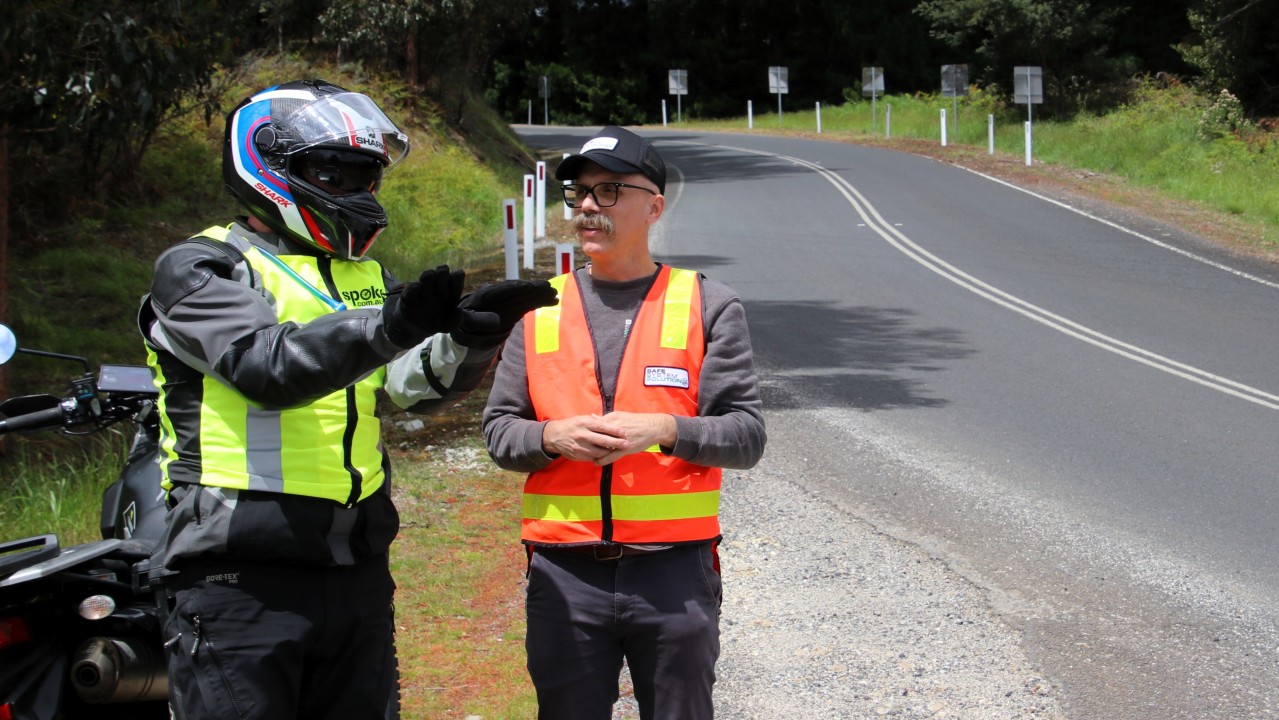
Motorcycle Safety Audit – a thematic road safety audit for motorcyclists.
Motorcyclists remain the highest risk road user group across the world. A standard road safety audit will often identify some motorcyclist risks, but a dedicated Motorcycle Safety Audit allows you to see the road through a rider’s eyes. It reveals risks that are otherwise easily missed.
Below is a simple, practical guide you can use to plan and deliver a successful Motorcycle Safety Audit.
Step 1. Identify the Route
Start by selecting the right route to audit. Good route selection is critical.
Key inputs to use include: Known popular riding routes. Motorcycle crash and trauma data. Community complaints and near miss locations. Infrastructure risk rating systems such as iRAP that include motorcycle risk.

In Victoria, Tasmania, WA, NSW and New Zealand, we had excellent results working directly with rider groups and representatives. They know where the risks are long before the data reveals it in tragic ways.
Step 2. Prepare for the Audit Properly
Safety starts in the planning phase, not on the road.
Key preparations include: Confirming safety gear and high visibility clothing for all participants. Developing a riding and driving protocol. Planning the route in advance. Identifying safe stopping locations. Preparing incident management procedures. Confirming communications between vehicles and riders. Checking weather conditions and contingencies.

A well planned audit is a safe audit.
Step 3. Select an Experienced Rider
The rider is your most important data collection tool.
Ideally the rider: Has strong riding experience. Understands how infrastructure influences rider behaviour. Understands the purpose and process of a safety audit. Has completed the Making Roads Motorcycle Friendly course or similar training.

Over the past 13 years we have worked with many exceptional riders including Christopher Davis, Duncan McRae, Tayne Forest, Tana Tan (PhD), Shaun Lennard, Dave Wright, Mark Russell, Wendy Taylor, and Richard Clayton. Each brought a different skill set, but all brought strong road reading capability.
Step 4. Select the Audit Team
Your broader audit team must also understand motorcycle risk.

Important attributes include: Strength in road safety audit practice. Understanding of how design details affect rider safety. Experience investigating motorcycle crashes. Willingness to learn from rider feedback.
Many auditors ride motorcycles themselves, but they are not always highly experienced riders. That is why pairing them with expert riders is so powerful. Each brings a different lens.
Step 5. Decide on the Audit Scope and Engagement Method
You need to be clear whether you are doing: A standard technical Motorcycle Safety Audit only. Or a broader stakeholder based audit with rider workshops and agency involvement.
My strong preference is always to include wider stakeholder input through facilitated workshops. However, even a purely technical audit still delivers significant value when done well.

Step 6. Conduct a Safety Briefing
Before anyone gets on the road: Confirm everyone is fit to ride or drive. Check that all motorcycles are in safe working order. Confirm full protective riding gear. Issue high visibility vests. Explain the audit process clearly to everyone. Reconfirm communication protocols and emergency procedures.

Never assume people understand the process without being briefed.
Step 7. Undertake the On Ground Audit
This is where the real learning happens.
A typical setup includes: One or more riders at the front. A trailing vehicle with the road safety auditors inside. The vehicle driver focuses only on driving. The auditors focus on observing hazards and recording issues.
The rider should be fitted with: A helmet microphone. A forward facing and rider perspective dash camera. Sensors if available to capture additional data.

The rider should provide a live commentary on: What they feel. What they see. What concerns them. What feels out of context. What feels inconsistent or unexpected.

Do one full clean run first. This is your familiarisation pass. Use it to check all equipment is working, understand the general character of the route, identify common risk themes and capture genuine first experience reactions.
After this first run, stop and review footage immediately to confirm nothing has failed. Then complete follow up runs as needed to capture detailed location specific risks.

Step 8. Run Stakeholder Workshops
If you are including broader input, this stage adds enormous value.
Good workshop practice includes: Pre preparing examples from other routes. Presenting examples of what works and what does not. Using clear images and video from the audit. Structuring the conversation to ensure all voices are heard.

Stakeholders may include local riders, road designers, maintenance crews, asset managers, policy officers and enforcement agencies.
These workshops also build mutual understanding. Engineers learn rider needs. Riders learn infrastructure constraints. This shared understanding improves solution quality.
Step 9. Write the Audit Report Clearly and Practically
Good reporting turns observations into action.
Each issue should include: Clear location. Clear description from a rider perspective. Factors affecting the level of risk. A prioritised risk rating. Practical recommended treatments.
There will always be more issues than immediate funding available. Strong prioritisation is what allows real outcomes to be delivered over time.

Step 10. Enjoy the Experience and the Purpose
Motorcycle Safety Audits are demanding but incredibly rewarding.
You are often working in beautiful environments, with passionate people, at the interface of engineering and human behaviour, with a genuine opportunity to save lives and prevent life changing injuries.
That is what this work is all about.

————-
Follow Kenn Beer on LinkedIn for more updates and road safety industry news.